Sculpting a career: From fine arts to ONMM
This month, as our profession observes National Osteopathic Medicine (NOM) Week from April 13-19, we explore the intersection of artistry, anatomy and advocacy through the lens of a physician dedicated to the evolution of osteopathic medicine. From his unconventional background in sculpture and neuroscience to his work with residency programs and dedication to osteopathic manipulative medicine (OMM), Alex King, DO, illustrates the versatile nature of the modern osteopathic physician.
Building on our discussion with Dr. King, he was also recently featured on the DO or Do Not podcast (hosted by Ian Storch, DO) to share a more personal look at the life of an OMM specialist. During the episode, Dr. King shares how he balances a high-volume clinical practice in Sewell, New Jersey, with his roles as an associate professor and residency program director.
“My day-to-day is very diverse. I see patients Monday, Wednesday and Friday full time, about 15 patients per day, doing a combination of acupuncture and osteopathic manipulative treatment (OMT),” Dr. King said. “Tuesday and Thursday, I teach labs for first- and second-year students. I also always have third- and fourth-year students and residents rotating with me when I see patients. It is a lot of teaching and a lot of patient care.”
In our interview, Dr. King expands on the rigorous training pathways of pursuing osteopathic neuromusculoskeletal medicine (ONMM), the vital role of clinical educators in preserving professional heritage and how hands-on, non-pharmacologic care is reshaping the broader landscape of modern medical practice.
Following is an edited Q&A.
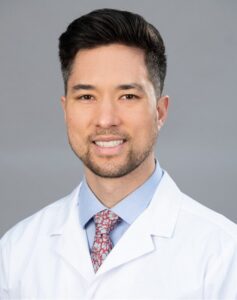
Walk us through your journey into osteopathic medicine. What ultimately led you to become a DO?
My path into osteopathic medicine wasn’t exactly linear. Before medical school, I studied sculpture and neuroscience, which may sound unusual, but both disciplines shaped the way I think and work osteopathically. Sculpture strengthened my three-dimensional understanding of anatomy and refined my manual skills, while neuroscience gave me a deep appreciation for the physiology of pain and the mind-body connection.
Even though I come from a family of MDs—and even a grandfather who practiced acupuncture and herbal medicine—I didn’t fully discover osteopathic medicine until college, when my premedical advisor said I would be an excellent candidate for DO schools. When I researched osteopathic medicine further, it felt like the perfect blend of everything I cared about: hands-on problem solving, anatomy, physiology and restoring the body’s natural ability to heal. That combination made the DO path a natural fit for me.
What motivated you to pursue a residency in osteopathic neuromusculoskeletal medicine (ONMM)? What training pathways are available for physicians seeking AOA Board Certification in neuromusculoskeletal medicine?
I was drawn to ONMM because I genuinely believe OMT changes lives in ways that medication alone can’t fix. During medical school and rotations, I saw countless patients whose pain or dysfunction stemmed from biomechanical issues that required hands-on correction. That motivated me to pursue advanced training so I could treat patients more effectively and more naturally.
In terms of pathways, physicians can pursue ONMM residency training like I did at the Philadelphia College of Osteopathic Medicine (PCOM). This specialty provides intensive clinical exposure to OMM in inpatient and outpatient settings. After completing residency, DOs can sit for the American Osteopathic Board of Neuromusculoskeletal Medicine (AOBNMM) Board Certification. MDs who complete designated pathways and OMM-focused training programs can also become eligible. Every year we are seeing more MDs become board certified in neuromusculoskeletal medicine, which is amazing.
Editor’s note: Physicians who want AOA Board Certification in NMM/OMM can choose either a full three-year ONMM residency or pair an internship year with a two-year ONMM residency program. They can also complete a full residency in another specialty plus a one-year ONMM training program. The webinar “Your Future in ONMM: Residency Insights and Q&A” on the AOBNMM website includes more information and highlights the different options available.
What types of patients do you typically see? How does your full physician training shape how you approach OMM care in outpatient and inpatient settings?
In outpatient settings, it’s true that there is a typical patient panel for OMM physicians, but, as I like to say, if you are a human, I can treat you. That’s the only qualification.
Mainly, I see a lot of patients with pain conditions, such as neck, back and postoperative pain, as well as those caused by traumatic injuries. I treat kids, athletes, geriatric patients and special needs populations. Many of these patients have been evaluated elsewhere and still don’t have answers. I like those cases because they give me a chance to be creative and use newer approaches.
Inpatient care is more acute. We treat pain from immobility, headaches and rib restrictions that affect breathing and healing. It requires a strong awareness of contraindications and careful clinical judgement.
What career options are available to physicians who earn AOA Board Certification in ONMM?
Board-certified ONMM physicians have a wide range of career options. Many work in outpatient solo or group private OMM, orthopedic or pain medicine practices, while others pursue inpatient OMM services, where manipulation can be used to support surgical, obstetric and hospitalized patients.
Physicians may also be interested in academic medicine, serving as faculty, researchers or program directors, as I now do at the Rowan-Virtua School of Osteopathic Medicine (Rowan-VirtuaSOM).
The specialty is incredibly versatile, and there is a growing demand for clinicians who can address pain and dysfunction without relying solely on pharmaceuticals.
How do you explain what OMM really is to premeds who are curious about osteopathic medicine?
If we are talking about a textbook definition, OMM is the use of a DO’s hands to diagnose and treat illness and pathology using their knowledge of anatomy and physiology. In practice, it is the act of using human touch to guide patients’ healing and to understand those patients on more fundamental levels than just conversation.
I use my hands, as a human being to another human being, to understand how they are feeling. I then use that knowledge to help correct patients back toward balance and healing. We get hundreds of hours of formal education in palpation and palpatory treatment, which helps to define what a DO is.
There’s also a growing need for osteopathic educators, from academic faculty to preceptors. What inspired you to invest in training the next generation of DOs?
Teaching wasn’t originally in my plan, but I quickly realized how much I enjoyed breaking down complex anatomy and OMM principles for medical students while I was a resident. What really motivated me was seeing how transformative OMM could be, not just for patients, but for students who suddenly “get it” and feel that confidence in their hands.
Today, I serve as an associate professor and residency program director of OMM at Rowan-VirtuaSOM. I also teach acupuncture principles, mentor residents and contribute to research aimed at objectively measuring the benefits of OMT.
Investing in the next generation ensures that hands‑on, human-centered medicine continues to grow and that patients everywhere have access to clinicians who truly understand osteopathic medicine.
I firmly believe osteopathic medicine is the future of healthcare in the U.S. DOs are becoming a larger part of the physician workforce every year. I don’t want our osteopathic heritage to be lost with the explosion in growth, and academic OMM physician professors are on the front lines of educating future DOs on the importance of osteopathic principles and remembering our distinct heritage.
You’re active on Instagram, TikTok and YouTube, where you share osteopathic education. What inspired you to take on that public-facing advocacy role?
My goal has always been to make osteopathic medicine accessible to everyone, not only to students and physicians but also to the general public, who might not know anything about it. Social media allows me to demystify OMM, share real techniques, highlight unique cases that I’ve treated and fixed, teach self‑care strategies and show people what makes DOs valuable.
Advocacy is important to me because there’s still confusion and misinformation about what DOs do. Through platforms like Instagram, TikTok and YouTube, I can give people exposure to the science, the artistry and the impact of osteopathic medicine. It’s also a great way to connect with students, mentor future DOs, answer questions and support the profession on a global scale.
Looking ahead, what future do you see for OMM within osteopathic medicine and the broader landscape of modern medical care?
The future of OMM is incredibly bright. As more patients seek non‑pharmacologic, anatomy‑driven solutions for pain and dysfunction, OMM will continue to play a larger role in both outpatient and inpatient settings.
I also see growth in research, especially objective measures of OMT’s effectiveness, as well as greater integration with other modalities, including herbal medicine, acupuncture, physical therapy and more.
There will be an expansion of OMM-trained physicians in hospitals, where manual therapy can support surgical, obstetric and critical care teams, and an increased educational demand, with more osteopathic institutions looking to hire board-certified OMM faculty.
Ultimately, OMM is becoming recognized not as an “alternative,” but as a powerful, evidence-informed component of modern medicine—one that puts human touch and anatomic precision at the center of healing.
Editor’s note: The views expressed in this article are the subject’s own and do not necessarily represent the views of the AOA. This article originally appeared in The DO by authors Alex Sher, DO, MSN, APRN and Angel Green, DO.